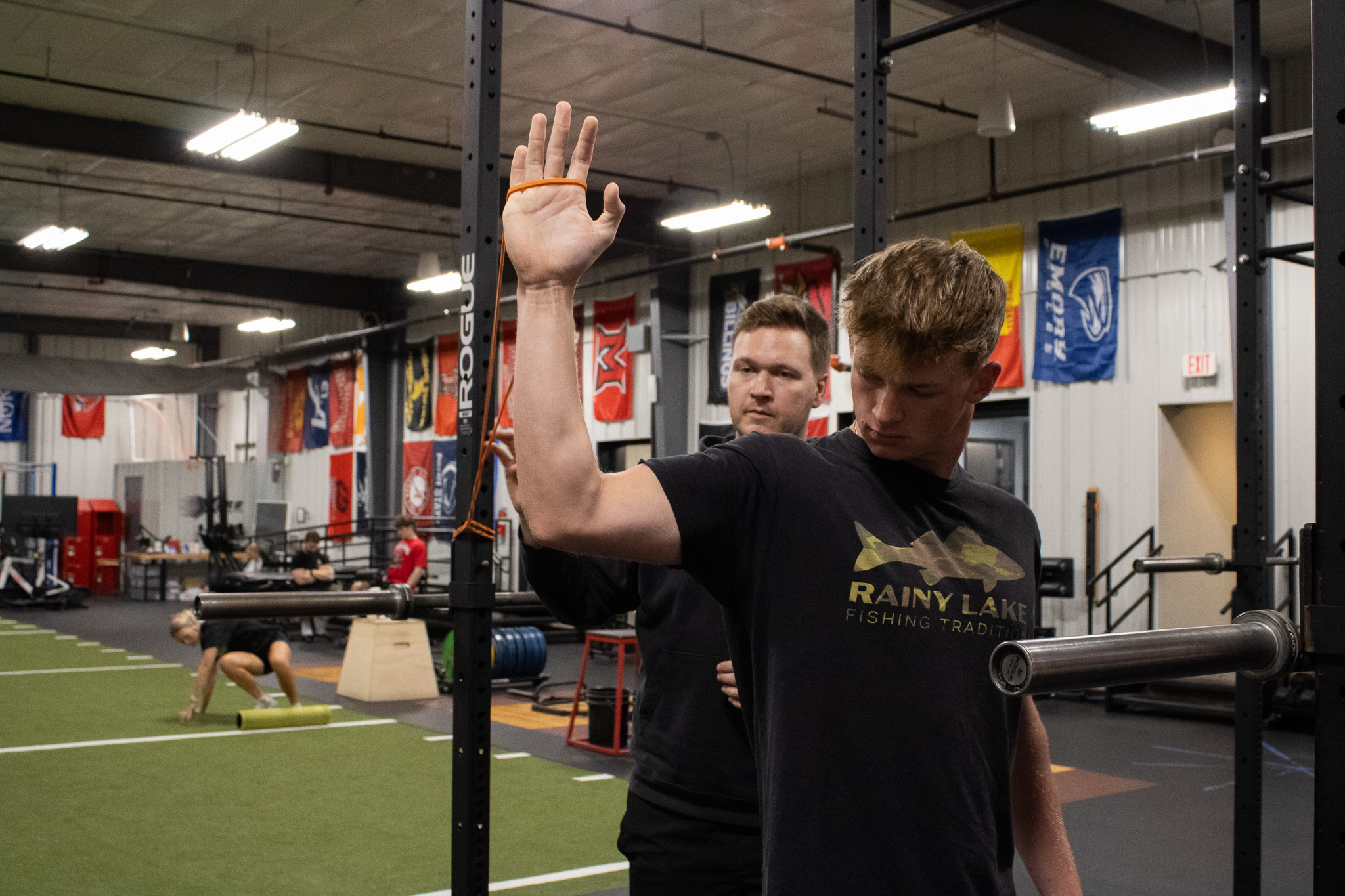
As a physical therapist who spends a lot of time working with youth athletes, I’ve noticed a troubling trend. These kids show up strong, disciplined, and hungry to improve – and then suddenly, they start breaking down. Not just physically, but mentally too. The easy assumption is bad luck or bad mechanics, but that’s rarely the full story. More and more research points to a deeper connection: burnout and overuse injuries often come from the same place – and they feed off each other.
In its 2024 clinical report, the American Academy of Pediatrics (AAP) highlighted this exact issue: burnout and overuse injuries don’t just co-occur, they share common upstream drivers and form part of the same stress–recovery continuum (1).
The Common Culprits: What Drives Both Burnout and Overuse Injury?
Let’s take a step back and look at what’s really fueling this cycle of breakdowns. When young athletes start losing their spark – or worse, battling nagging injuries that never seem to heal – it’s not random bad luck. There are patterns here, and they’re well-documented. According to the AAP Council on Sports Medicine and Fitness, these are the key risk factors (1):
- High training volume
- Year-round participation in a single sport
- Early sport specialization
- External performance pressures
In short, too much, too soon, for too long. These factors create chronic physical load and constant psychological stress. The result? An athlete with reduced capacity to recover—both mentally and physically. That’s why burnout increases the risk of overuse injuries, and vice versa.
And it doesn’t stop there. Psychological stressors such as perfectionism, poor sleep, high athletic identity, and overall life stress also increase the risk. They wear down recovery systems, increase tissue strain, and keep young athletes stuck in a cycle of fatigue and frustration (1).
Style, Motivation, and Early Specialization: A Perfect Storm
Burnout and overuse injuries don’t happen in isolation –they’re often the product of the environment young athletes grow up in, both on and off the field. Coaching style, motivation, and early sport specialization all play powerful roles in shaping how well an athlete’s body and mind can keep up with the demands placed on them.
Athletes who experience controlling coaching or parenting, who play out of fear of failure, or who are motivated mainly by pleasing others are at a much higher risk of burnout (1). That constant psychological pressure doesn’t just drain mental resilience – it slows physical recovery, setting the stage for injury. In contrast, when athletes are given a voice in their goals and encouraged to enjoy their sport for its own sake, they build autonomy, resilience, and longevity.
And then there’s early specialization, one of the biggest red flags in youth sports. Focusing on a single sport too young might seem like a shortcut to success, but the data tells another story. In a study of more than 2,000 athletes aged 12–18, those with high levels of specialization were far more likely to experience overuse injuries (2). Athletes who trained more months per year or more hours per week than their age in years faced especially steep risks (2).
The takeaway? The same patterns that drive burnout – constant pressure, lack of autonomy, and early specialization – are the very same ones that lead to injury. Building balanced, athlete-centered environments isn’t just about better coaching. It’s about keeping young athletes healthy, motivated, and in the game for the long run.
Practical Solutions: What Parents and Coaches Can Do
After unpacking all the risks, the good news is there’s a clear path forward. Burnout and overuse injuries aren’t inevitable – they’re preventable with the right balance of training, rest, and mindset. Parents and coaches have tremendous influence here. By shaping how young athletes train, recover, and think about their sport, they can protect both performance and passion for the long haul. The American College of Sports Medicine (ACSM) and other leading groups now recommend the following evidence-based strategies (3):
- Limit single-sport training before adolescence
- Encourage cross-training to reduce repetitive strain
- Ensure athletes take at least 1–2 months off from their primary sport each year
- Cap weekly training hours to no more than an athlete's age
- Foster intrinsic motivation and enjoyment of sport
These may sound simple, but they’re powerful. Following these guidelines doesn’t just cut down on injury risk – it helps young athletes stay mentally fresh, physically resilient, and excited to keep playing. In short, it keeps the love of the game alive.
From a Physical Therapist’s Perspective
As a PT, I treat overuse injuries regularly. But recovery isn't just about rest and rehab - it’s about recognizing the broader picture. If a young athlete is repeatedly injured, seems emotionally fatigued, or has lost their love for the game, it’s time to take a closer look at their training schedule, their motivation, and the environment they’re in.
By addressing the shared risk factors behind both burnout and overuse injuries, we can help athletes stay healthy - not just for the season, but for the long run.
Looking for support?
If you’re navigating recurring injuries or suspect burnout in a young athlete, don’t wait until it worsens. A comprehensive evaluation can help identify biomechanical, psychological, and environmental factors - and build a plan that supports both recovery and performance.
References
- American Academy of Pediatrics. Overuse Injuries, Overtraining, and Burnout in Young Athletes. Council on Sports Medicine and Fitness. Published January 2024.
- Bell DR, Post EG, Trigsted SM, Hetzel S, McGuine TA, Brooks MA. Prevalence of sport specialization in high school athletics: A 1-year observational study. Orthop J Sports Med. 2016;4(9):2325967116663926.
- American College of Sports Medicine. Youth Sports Participation and Overuse Injuries. Consensus Statement. 2022.
- Brenner JS. Overuse injuries, overtraining, and burnout in child and adolescent athletes. Pediatrics. 2007;119(6):1242-1245.
- DiFiori JP, Benjamin HJ, Brenner JS, et al. Overuse injuries and burnout in youth sports: A position statement from the American Medical Society for Sports Medicine. Clin J Sport Med. 2014;24(1):3–20.
- Jayanthi NA, Pinkham C, Dugas L, Patrick B, LaBella C. Sports specialization in young athletes: Evidence-based recommendations. Sports Health. 2013;5(3):251–257.